

High-yield savings accounts can help your emergency fund and short-term savings earn more interest without exposing the money to stock-market risk. The name sounds complicated, but the basic idea is simple: you deposit cash at a bank or credit union, earn a variable annual percentage yield (APY), and keep access to your money when you need it.

A high APY is useful, but it should never be the only factor in your decision. Insurance coverage, fees, minimum-balance rules, transfer speed, and customer service all affect whether an account is a good fit. This guide explains how high-yield savings accounts work, how to compare them, and which risks to check before opening one.
What Are High-Yield Savings Accounts?
A high-yield savings account is a deposit account that generally pays a higher APY than a traditional savings account. Many are offered by online banks, although some credit unions and traditional banks also compete with attractive rates.
The account is designed for money you want to keep safe and reasonably accessible, such as an emergency fund, a future down payment, annual insurance premiums, or a planned purchase. It is not the same as a checking account, certificate of deposit (CD), brokerage account, or money market mutual fund.
How APY Works
APY estimates how much your deposit could earn over one year after accounting for compounding. It is more useful than looking only at the stated interest rate because APY reflects how often interest is added to the account.
For example, if you deposit $10,000 into an account with a hypothetical 4.00% APY and the APY remains unchanged for a full year, the balance would earn about $400 before taxes and withdrawals. Actual results can differ because savings rates are usually variable, banks may change them at any time, and deposits or withdrawals change the balance.
Always compare APY with APY—not APY with a simple interest rate—and confirm whether the advertised rate applies to your entire balance or only a portion of it.
Are High-Yield Savings Accounts Safe?
They can be, provided the account is held at a properly insured institution and your balance stays within applicable coverage limits. The Federal Deposit Insurance Corporation (FDIC) insures eligible deposits at FDIC-insured banks. The standard coverage amount is $250,000 per depositor, per insured bank, for each account ownership category.
Credit union deposits may be insured by the National Credit Union Administration (NCUA) rather than the FDIC. Before transferring money, verify the institution directly through the appropriate federal insurance lookup tool. Do not rely solely on a bank-like brand name or an advertisement.
Important: FDIC insurance covers eligible bank deposits. It does not insure stocks, bonds, mutual funds, crypto assets, annuities, or the contents of a safe-deposit box.
How to Compare High-Yield Savings Accounts
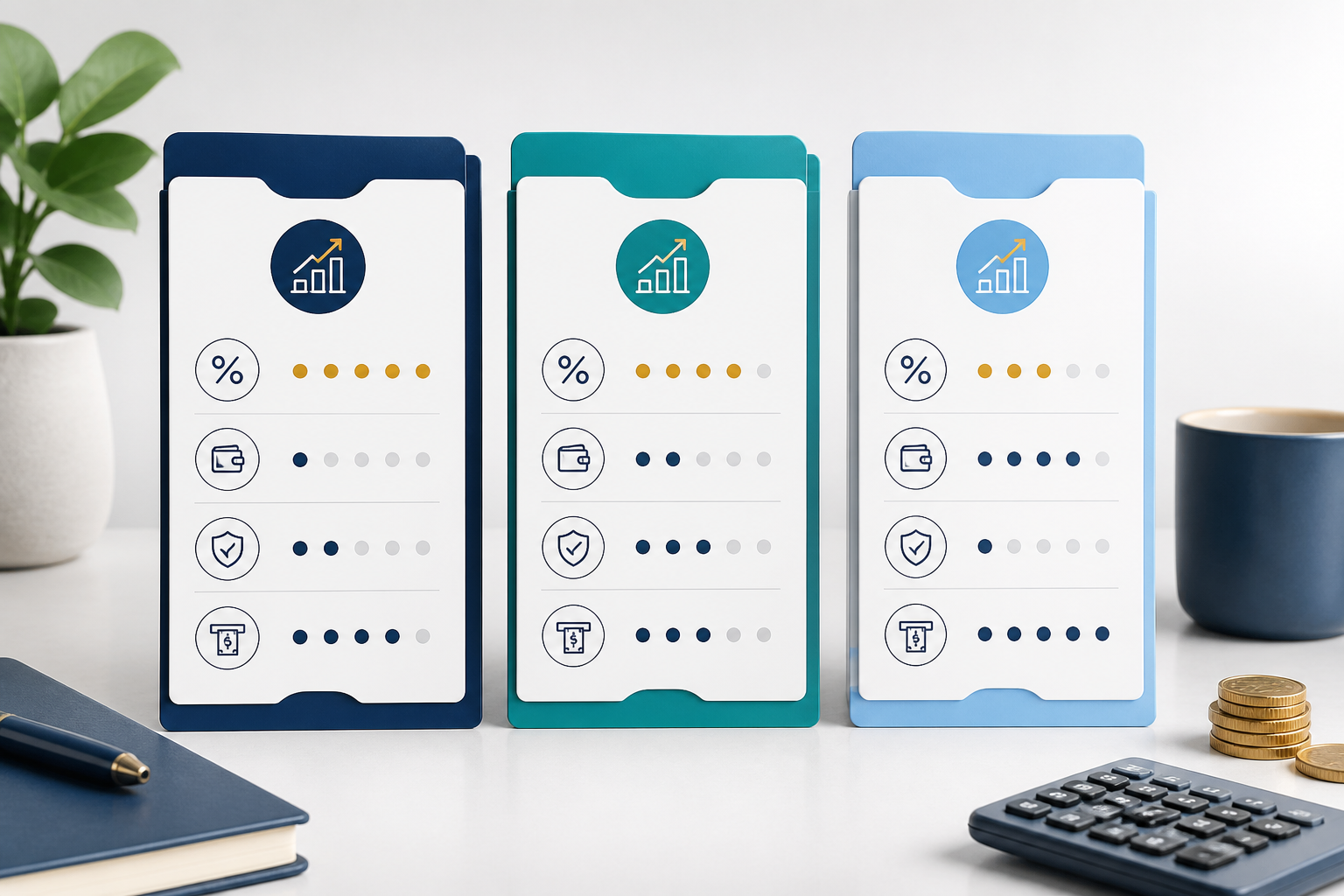
1. APY and Rate Conditions
Check the current APY, whether it is variable, and whether you must meet conditions to earn it. Some promotions apply only to new customers, new deposits, limited balance tiers, or a short introductory period.
2. Monthly Fees
A monthly maintenance fee can erase much of the extra interest, especially on a smaller balance. Look for a no-fee account or make sure any waiver requirement is realistic for you.
3. Minimum Deposit and Minimum Balance
Some accounts can be opened with $0, while others require a minimum opening deposit. A separate minimum balance may be needed to earn the advertised APY or avoid fees. Read both rules carefully.
4. Deposit Insurance
Confirm that the bank is FDIC-insured or the credit union is federally insured by the NCUA. If a financial technology company offers the account, identify the partner bank that actually holds the deposit and understand when insurance coverage begins.
5. Access to Your Money
Review transfer options, daily limits, transfer holds, ATM access, and withdrawal timing. An account that takes several business days to transfer funds may be inconvenient for emergencies, even if the APY is excellent.
6. Customer Service and Account Security
Look for multi-factor authentication, account alerts, a clear fraud-reporting process, and support hours that work for you. A well-designed mobile app is helpful, but security and reliable service matter more than cosmetic features.
High-Yield Savings Accounts vs. Other Options
| Option | Best for | Main trade-off |
|---|---|---|
| High-yield savings account | Emergency funds and short-term goals | Variable APY |
| Traditional savings account | Convenience at an existing bank | Often a lower APY |
| Certificate of deposit | Money you can leave untouched for a set term | Early-withdrawal penalties may apply |
| Money market deposit account | Savings with possible check or debit features | Requirements and fees vary |
| Brokerage investments | Long-term growth goals | Market losses are possible and deposits are not FDIC-insured |
Who Should Consider a High-Yield Savings Account?
- Someone building an emergency fund.
- A saver holding cash for a goal within the next few years.
- A household keeping tax payments, insurance premiums, or home-repair reserves separate.
- A person who wants interest without accepting market volatility.
A high-yield account may be less useful if you need frequent debit-card spending, cannot wait for electronic transfers, or would exceed insurance limits without planning ownership categories carefully.
Potential Drawbacks
- Rates can fall: APYs are variable and may change after Federal Reserve or market conditions shift.
- Transfers can take time: Moving money between banks may not be instant.
- Promotional terms can expire: A headline rate may not be permanent.
- Fees can reduce earnings: Maintenance, excess-transaction, wire, or account-closing fees may apply.
- Interest is generally taxable: The IRS generally treats interest credited to savings accounts as taxable income unless a specific exclusion applies.
How to Open an Account Safely
- Define the purpose of the money and how quickly you may need it.
- Compare APY, fees, minimums, transfer speed, and service—not only the advertised rate.
- Verify federal deposit insurance using an official FDIC or NCUA resource.
- Read the account agreement and fee schedule before applying.
- Use the institution’s official website or app, not a link from an unsolicited message.
- Create a unique password and enable multi-factor authentication.
- Start with a small transfer and confirm access before moving a large balance.
- Review the APY and account terms periodically.
Frequently Asked Questions
Can I lose money in a high-yield savings account?
Your dollar balance does not fluctuate like a stock investment, but fees can reduce it and inflation can reduce purchasing power. Eligible deposits within applicable limits are protected if an FDIC-insured bank fails.
How many high-yield savings accounts can I have?
There is no universal limit, but managing too many accounts can become complicated. Remember that FDIC coverage is calculated by depositor, insured bank, and ownership category—not simply by the number of account numbers.
Is the highest APY always the best choice?
No. A slightly lower APY at an institution with no fees, faster transfers, strong security, and dependable support may be more valuable.
Do I pay tax on the interest?
Generally, yes. The IRS generally treats interest from savings and checking accounts as taxable interest income. Your specific tax result depends on your circumstances, so consult a qualified tax professional when needed.
Explore more practical money guidance in our Banking guides.
Bottom Line
High-yield savings accounts can be a practical home for emergency cash and short-term goals. Start by verifying deposit insurance, then compare APY, fees, minimum balances, access, and security. The right account is not necessarily the one with the flashiest rate—it is the one that protects your cash, fits your habits, and keeps your money available when you need it.
This article is for general educational purposes and is not individualized financial or tax advice. Rates and account terms can change. Verify current terms with the financial institution before opening an account.