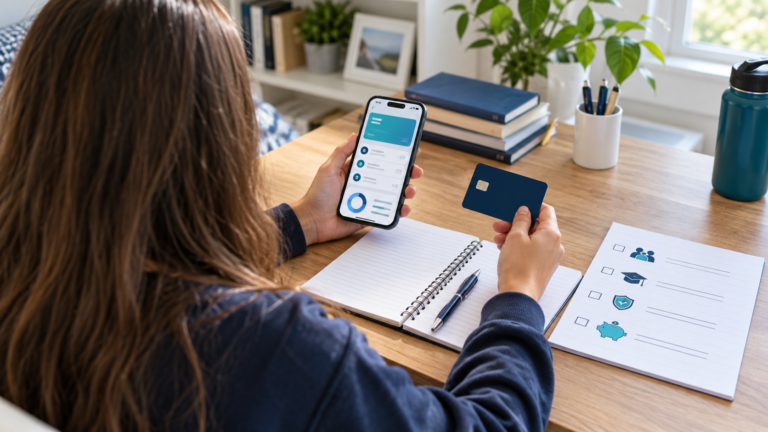
Online Banks for Freelancers
The right online bank can help freelancers separate business money, receive client payments, track expenses, and prepare cleaner records for tax time.

- Choose an account that accepts your real client payment methods at a predictable total cost.
- Keep business income and expenses separate from personal spending to make bookkeeping and tax records easier.
- Confirm FDIC or NCUA insurance, especially when a financial app uses one or more partner banks.
- Compare ACH, wire, cash-deposit, ATM, invoicing, accounting-integration, and customer-support features.
- Read the business account agreement carefully because commercial accounts may have different fraud protections from consumer accounts.
Online banks for freelancers can be a practical way to manage irregular income without visiting a branch. Many provide low-fee checking, digital invoices, ACH transfers, card controls, and connections to accounting software. But a polished app does not automatically make an account suitable for your business.
The best fit depends on how clients pay you, how quickly you need funds, whether you handle cash, your monthly transaction volume, and the legal structure of your freelance business. Compare current disclosures rather than relying on a “free business banking” headline.
This article provides general educational information, not personalized financial, tax, accounting, or legal advice. Fees, eligibility, deposit insurance arrangements, transfer limits, and account features can change. Review current agreements and consult a qualified professional when your situation requires it.
Why Freelancers May Need a Separate Bank Account
A separate account creates a clearer boundary between client revenue and personal spending. IRS Publication 583 says one of the first things a new business should do is open a business checking account and keep it separate from a personal checking account. The IRS also notes that separate accounts make recordkeeping easier.
For a sole proprietor, a separate business account is not a magic tax deduction and does not turn personal expenses into business expenses. Its practical value is organization: invoices arrive in one place, business purchases leave one account, and monthly statements become easier to reconcile with receipts and accounting records. An LLC or corporation may also need separation to support its entity formalities; ask an attorney or accountant about your structure.
What to Look for in Online Banks for Freelancers
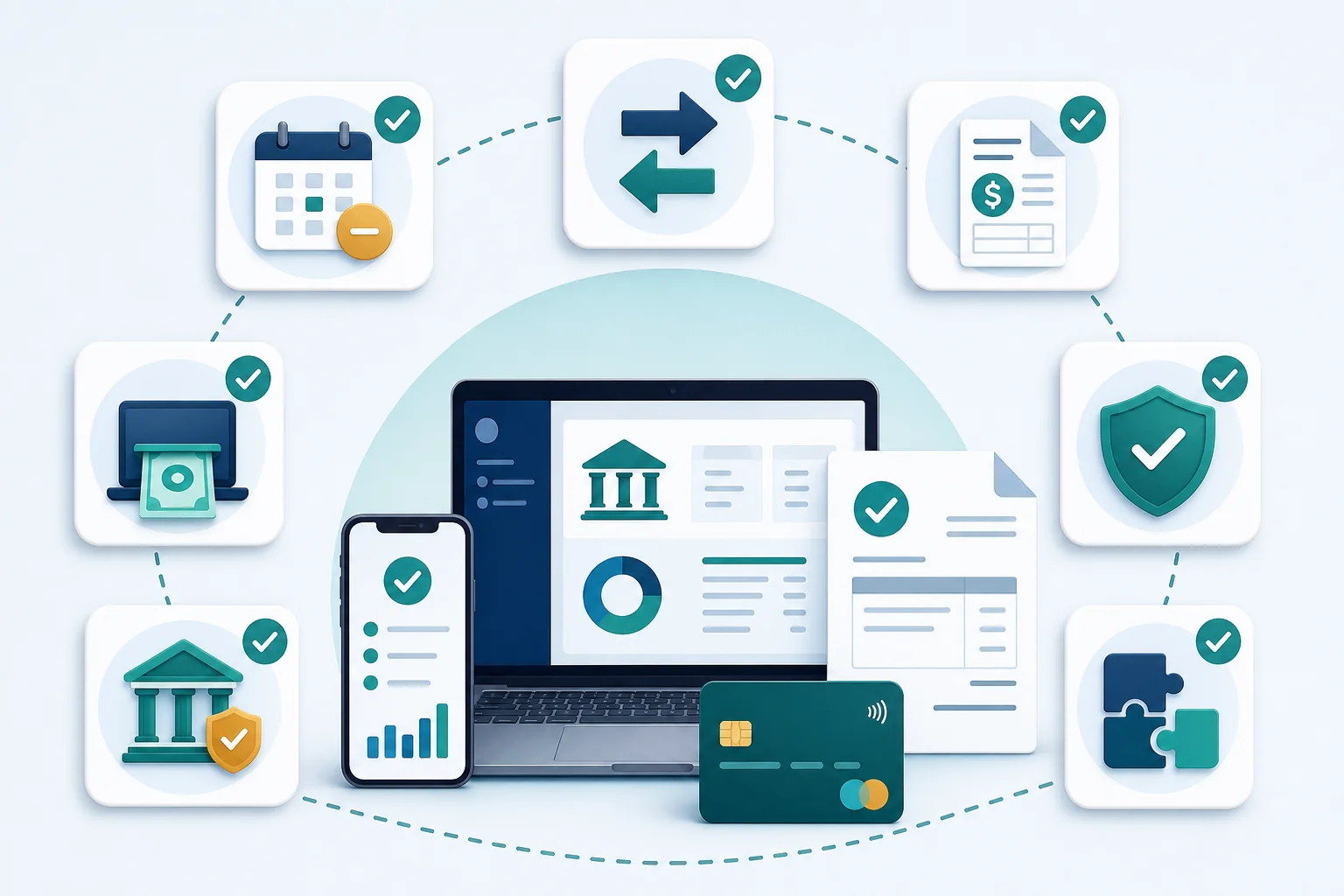
Low, predictable fees
Compare monthly maintenance fees, minimum-balance rules, transaction limits, incoming and outgoing wire fees, ACH fees, cash-deposit charges, ATM costs, and stop-payment fees. A no-monthly-fee account can still charge for specific services.
Client payment options
Identify whether clients pay by ACH, check, wire, card, marketplace, or payment app. Review processing fees, transfer timing, incoming payment limits, and whether the account can receive payments under your legal business or DBA name.
Funds availability
Fast access matters when income is uneven. Read hold policies for checks and transfers. “Instant” transfers may cost extra, and a displayed payment does not always mean the funds are available to spend.
Accounting integrations
Direct feeds to your bookkeeping platform can reduce manual entry, but confirm what data syncs, how duplicates are handled, and whether you can export CSV or other records if the integration fails.
Cash and ATM access
Online-only banking may be inconvenient for photographers, artists, tutors, or other freelancers who receive cash. Check deposit locations, retailer fees, daily limits, and access to fee-free ATMs.
Responsive support
A frozen card or delayed client payment can interrupt your work. Compare support hours, secure messaging, phone access, escalation procedures, and how quickly replacement cards are issued.
Business Checking vs. Personal Checking
| Feature | Business checking | Personal checking |
|---|---|---|
| Intended use | Business income, expenses, vendors, and client payments | Household income and personal spending |
| Account name | May support an LLC, corporation, or registered DBA name | Usually opened in an individual consumer’s name |
| Tools | May include invoicing, employee cards, permissions, and accounting exports | Typically focused on consumer payments, savings, and bill pay |
| Protections | Commercial agreement and state law may govern unauthorized transactions | Consumer electronic-transfer protections generally apply when requirements are met |
| Documentation | May require formation documents, EIN, DBA registration, or business license | Usually personal identification, address, and SSN or ITIN |
A sole proprietor may be able to operate without a formal business checking account, but a bank’s personal account agreement may prohibit business use. Review the agreement instead of assuming a personal account is acceptable. Business products can cost more, yet the separation and tools may justify that cost.
How FDIC Insurance Applies to Freelancer Accounts
At an FDIC-insured bank, eligible deposits are generally insured up to $250,000 per depositor, per insured bank, for each ownership category. Coverage depends on ownership, not simply on the account’s marketing label.
A sole proprietorship has no separate legal identity for FDIC purposes. Its deposits are generally combined with the owner’s other single accounts at the same insured bank. A valid corporation, partnership, or unincorporated association engaged in an independent activity may receive separate business-organization coverage. If you use a fintech platform, identify the partner bank and read how funds are held. Use FDIC BankFind to verify the insured institution.
Online Bank, Traditional Bank, or Credit Union?
An online bank may offer low costs and excellent digital tools. A traditional bank can be better for regular cash deposits, cashier’s checks, and in-person problem solving. A credit union may provide member-focused service and competitive terms, although membership and branch access can be limited. Some freelancers use one primary account plus a backup account so a technical issue or fraud review does not stop every payment.
Do not split money merely to chase features without considering bookkeeping complexity and deposit insurance ownership categories. Every extra account adds reconciliation work and another set of credentials to protect.
How to Open and Set Up a Freelancer Bank Account
- Define your workflow. List payment types, typical monthly deposits, outgoing bills, cash needs, international clients, and bookkeeping software.
- Compare complete pricing. Estimate a normal month and a busy month, including transfer, wire, ATM, cash-deposit, and payment-processing costs.
- Verify the institution. Confirm FDIC or NCUA insurance and understand the legal bank or credit union holding the deposits.
- Gather documents. Requirements may include personal identification, SSN or ITIN, EIN, business formation records, DBA registration, address, and ownership information.
- Connect payments carefully. Update invoices, marketplaces, and payment processors one at a time. Test a small transfer before redirecting all client income.
- Create bookkeeping rules. Categorize transactions, save receipts, reconcile monthly, and schedule transfers for taxes and owner pay.
- Secure the account. Use a unique password, multifactor authentication, transaction alerts, card controls, and limited user permissions.
Common Freelancer Banking Mistakes
- Mixing personal and business spending: This makes records harder to explain and increases bookkeeping cleanup.
- Choosing by advertised monthly fee: Wire, ACH, cash-deposit, card-processing, and excess-transaction costs may matter more.
- Assuming every fintech is a bank: Verify the partner institution and deposit insurance arrangement.
- Ignoring transfer limits: Daily or monthly caps can delay taxes, contractor payments, or large purchases.
- Depending on one access method: Keep recovery information current and consider a reasonable backup for essential payments.
- Using business debit like a consumer card: FDIC guidance warns that federal unauthorized-transaction protections can differ for commercial accounts. Review your agreement and report problems immediately.
A Simple Monthly Banking Routine
Reconcile the account against invoices, receipts, and bookkeeping records every month. Identify outstanding invoices, duplicate charges, subscriptions, and transfers that need documentation. Label owner contributions and owner draws accurately instead of treating them as client revenue or deductible expenses.
Set aside money for estimated taxes based on guidance appropriate to your situation. The bank account can organize cash, but it does not calculate what you owe or determine whether an expense is deductible. Keep supporting documents and work with a CPA, Enrolled Agent, or other qualified tax professional when needed.
Frequently Asked Questions
Do freelancers need a business bank account?
Requirements depend on business structure, state law, and bank policy. Even when not legally required for a sole proprietor, a separate account can simplify recordkeeping. LLCs and corporations should obtain advice about entity formalities.
Can a freelancer use a personal checking account for business?
A bank may restrict business activity in a personal account agreement. Mixing funds also complicates bookkeeping. Review the terms and consider a dedicated business account even if you operate as a sole proprietor.
Are online business banks FDIC-insured?
Some are insured banks; others are fintech companies working with partner banks. Confirm the actual FDIC-insured institution, ownership category, and how deposits are titled rather than relying on an app’s branding.
What documents are needed to open a freelancer bank account?
Common requests include government ID, address, SSN or ITIN, EIN when applicable, and business or DBA documents. Requirements vary by institution and legal structure.
What bank features matter most for international freelance clients?
Compare incoming wire fees, exchange-rate markups, supported currencies, intermediary bank charges, transfer timing, and required sender information. Also consider how easily each payment can be matched to an invoice.
Bottom Line
Online banks for freelancers work best when they fit the way you are actually paid and help maintain clean business records. Compare total fees, payment rails, cash access, integrations, support, security, and deposit insurance before opening an account.
References
- Internal Revenue Service — Publication 583: Starting a Business and Keeping Records
- Internal Revenue Service — Income & Expenses FAQ
- Federal Deposit Insurance Corporation — Your Business, Your Deposits
- FDIC — Single Accounts and Sole Proprietorships
- FDIC — Corporation, Partnership and Unincorporated Association Accounts
- FDIC BankFind Suite
- Consumer Financial Protection Bureau — Fees on “Free” Checking Accounts