Online Banks With ATM Access
Online banking does not have to mean giving up convenient cash access. The right account combines a useful ATM network, transparent fees, practical withdrawal limits, and reliable digital tools.
Online banks with ATM access can offer the convenience of app-based banking while still letting you withdraw cash across the United States. The key is understanding which machines are in network, whether the bank charges an out-of-network fee, whether an ATM operator can add a surcharge, and how reimbursement policies work.
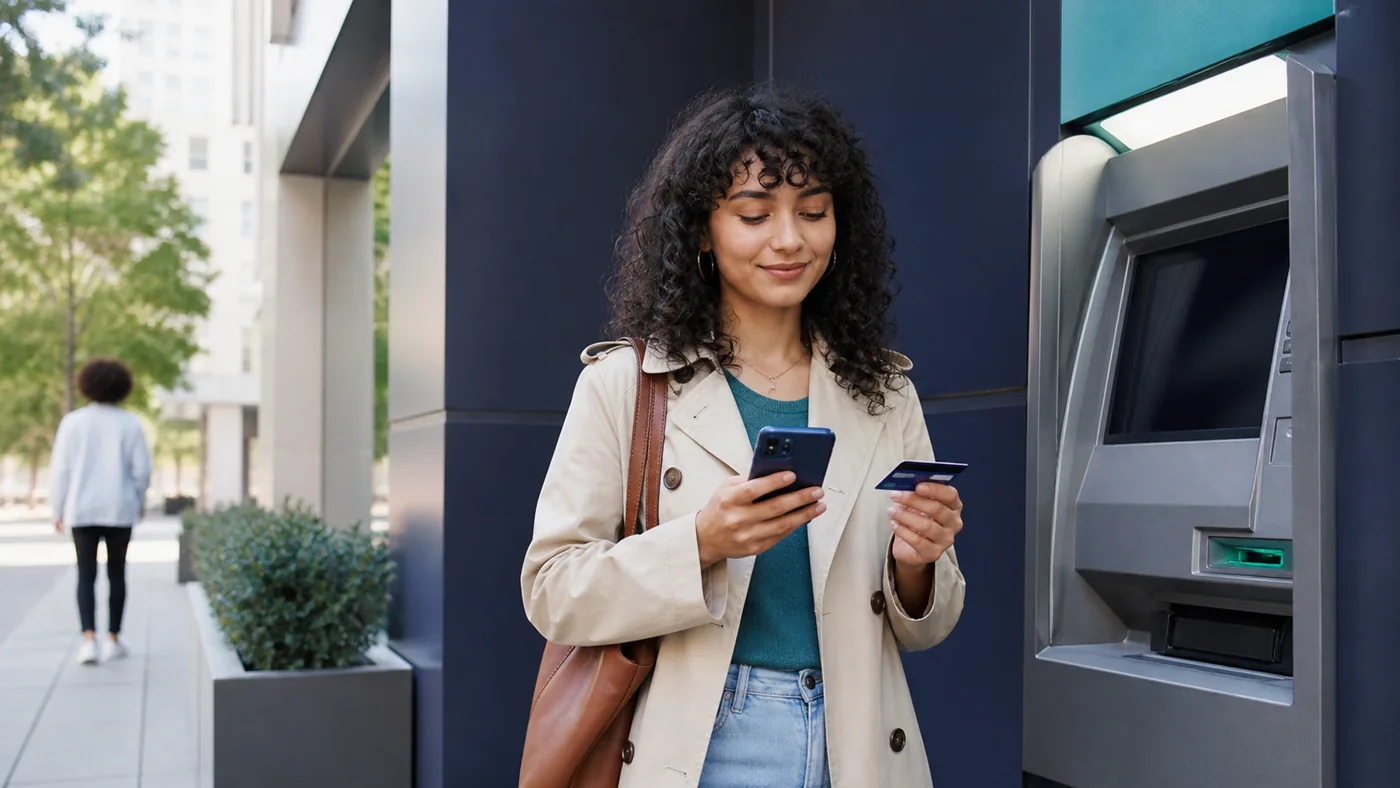
Check the bank’s live ATM locator before opening an account—not just the advertised network size.
- Both your bank and the ATM owner may charge when you use an out-of-network machine.
- A large network is useful only if participating ATMs are near the places you actually visit.
- Review reimbursement caps, eligible surcharge types, timing, and documentation requirements.
- Withdrawal access and cash-deposit access are different features.
- Confirm the bank and deposit-insurance status through official FDIC resources.
How ATM Access Works at an Online Bank
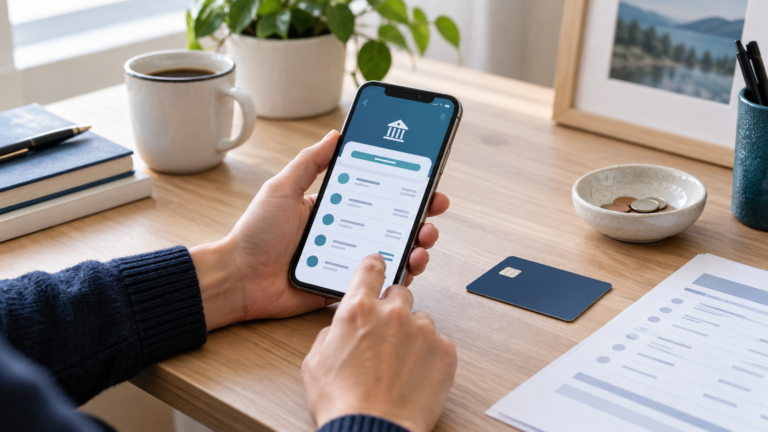
Most online banks do not operate a traditional branch network. Instead, they may participate in a third-party ATM network, own a smaller group of branded machines, reimburse some outside fees, or combine these approaches. Your debit card and the bank’s mobile app connect you to the available machines.
The phrase fee-free ATM network usually means the bank will not charge its own withdrawal fee at participating machines. It does not guarantee that every ATM displaying a familiar payment-card logo is included. Use the locator inside the bank’s official app or website and verify the machine before inserting your card.
Two ATM Fees Can Apply to One Withdrawal
The Consumer Financial Protection Bureau explains that both your bank or credit union and the ATM owner may charge a fee when you use another institution’s machine. Your financial institution must disclose its fee in writing when you open the account or when it adds a new fee. The ATM operator must disclose its fee at the machine.
If the on-screen surcharge is unacceptable, cancel before confirming and find an in-network ATM. Be aware that repeated small withdrawals can multiply fees; planning cash needs may lower the number of transactions.
What to Compare
| Feature | What to ask | Why it matters |
|---|---|---|
| Network coverage | Are ATMs near home, work, school, and travel routes? | Real convenience matters more than a national headline number. |
| Bank ATM fee | Does the bank charge outside its network? | This may be added to the operator’s surcharge. |
| Reimbursement | Is it unlimited, monthly capped, or account-tier dependent? | A rebate can reduce costs only when its conditions are met. |
| Withdrawal limits | What are the daily and per-transaction limits? | A machine may also impose a lower limit. |
| Cash deposits | Which ATMs or retailers accept deposits, and at what cost? | Withdrawal access does not imply deposit access. |
| International access | Are foreign ATM and currency-conversion fees charged? | Travel can add several layers of cost. |
| Security controls | Can you lock the card and set instant alerts? | Fast controls help limit damage after loss or fraud. |
How ATM Fee Reimbursement Really Works
Some online banks refund ATM surcharges, but the details vary. A policy may reimburse only fees identified electronically as ATM surcharges, exclude international transactions, apply only to certain account tiers, or cap refunds each statement cycle. Reimbursement might appear immediately or only after the statement closes.
Before relying on a rebate, read the fee schedule and ask:
- Is there a dollar or transaction limit per month?
- Does the refund include the bank’s own fee, the operator’s surcharge, or both?
- Are international and balance-inquiry fees excluded?
- Must you submit a receipt if the surcharge is not coded correctly?
- Can the policy change with advance notice?
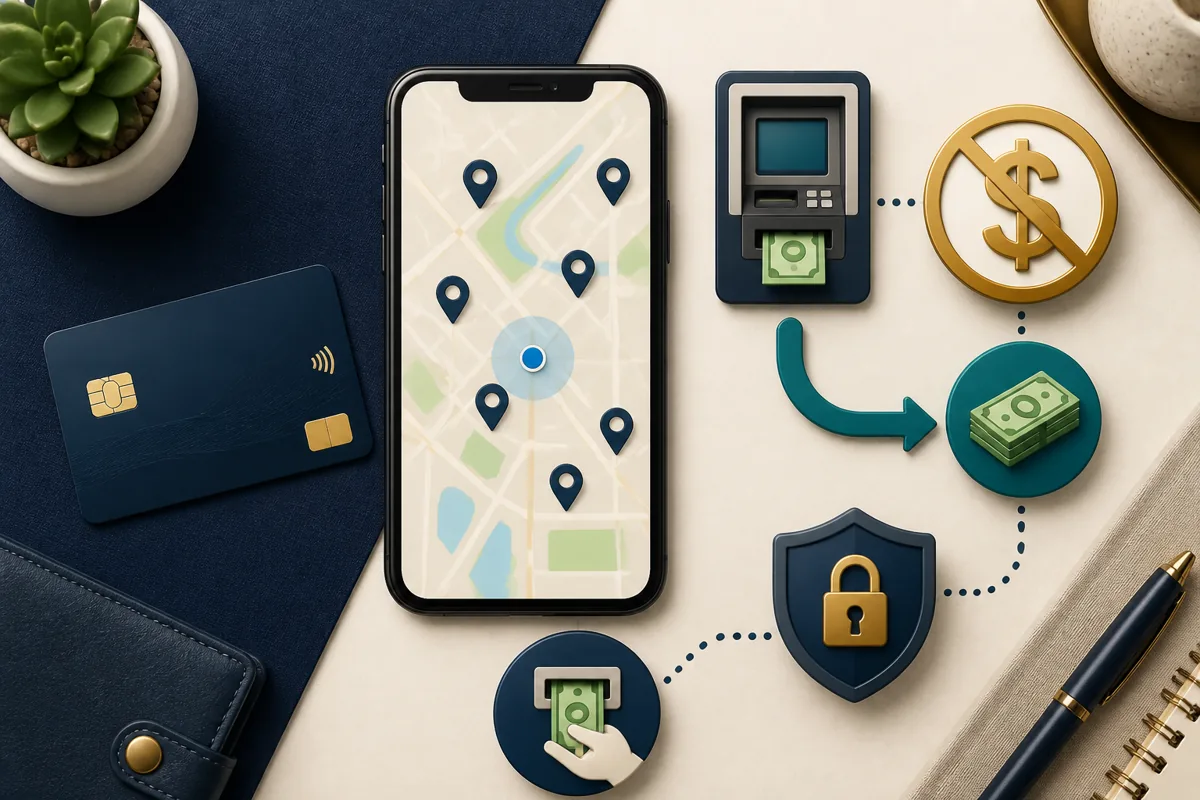
Compare location, fees, reimbursement, limits, deposit capability, and card controls as one system.
Withdrawal Access Is Not Cash-Deposit Access
An ATM may let you withdraw cash from an online bank account but refuse deposits. Some banks accept cash at selected deposit-enabled ATMs; others use participating retailers that may charge a service fee. Another option is buying a money order and depositing it through the mobile app, but that adds cost, time, and potential deposit holds.
If you regularly earn or receive cash, test the bank’s cash-deposit workflow before making it your primary account. Confirm supported locations, per-transaction limits, daily limits, fees, receipt procedures, and when deposited funds become available.
Daily Limits and Machine Limits
Your bank may impose a daily ATM withdrawal limit for security and liquidity management. The ATM owner can also set a smaller per-transaction cap. That can force multiple withdrawals and possibly multiple surcharges. Purchase limits, person-to-person transfers, and teller cash advances may follow separate rules.
For a planned large cash need, contact the bank in advance. Do not assume a temporary limit increase is available. Consider safer payment methods where practical, because carrying a large amount of cash creates theft and loss risk.
International ATM Access
International withdrawals may include an out-of-network fee, an operator surcharge, and a foreign-transaction or currency-conversion fee. When an ATM offers to convert the withdrawal into U.S. dollars, review the exchange rate and markup carefully. Declining an unfamiliar conversion option may allow your card network or bank to perform the conversion, but verify your card terms before traveling.
Tell the bank about travel only if its current procedures request it, save the international support number separately, and carry a backup payment method. Confirm which countries or regions are restricted and whether card-lock controls work while abroad.
ATM Security Checklist
- Use a well-lit machine in a busy or monitored location.
- Inspect the card slot and keypad for loose or unusual attachments.
- Shield the keypad and never share your PIN.
- Cancel if the screen, surcharge, or amount looks wrong.
- Take your card, cash, and receipt before leaving.
- Turn on instant withdrawal alerts and review the transaction promptly.
- Lock the card in the app and contact the bank if anything is suspicious.
FDIC insurance protects covered deposits if an insured bank fails; it does not reimburse cash stolen after a withdrawal or losses from scams. Use the FDIC BankFind Suite to confirm that the legal institution holding the deposit is insured.
A Practical Account-Selection Plan
- Map your routine. List where you commonly need cash.
- Check live locations. Search each candidate bank’s official ATM locator.
- Read the fee schedule. Record bank fees, operator-surcharge rules, and reimbursement limits.
- Check withdrawal limits. Make sure normal and occasional cash needs fit.
- Test deposit options. If cash deposits matter, calculate their total cost.
- Verify the institution. Match the legal bank name in FDIC BankFind.
- Activate safeguards. Set alerts and learn how to lock the card.
Frequently Asked Questions
Do online banks have ATMs?
Many online banks provide access through partner ATM networks, branded machines, fee reimbursement, or a combination. Availability varies, so check the official locator for places you actually visit.
Can an ATM and my bank both charge me?
Yes. The CFPB states that your bank or credit union and the ATM owner can each charge a fee for an out-of-network withdrawal. The ATM should display the operator surcharge before you approve the transaction.
How do I avoid ATM fees with an online bank?
Use the bank’s official locator to choose an in-network machine, plan withdrawals to reduce transaction frequency, and understand any reimbursement policy. Confirm that a listed ATM is still participating before using it.
Can I deposit cash at any network ATM?
No. Many network ATMs allow withdrawals but not deposits. Deposit-enabled locations, retailer services, fees, limits, and availability rules depend on the bank.
Are online bank accounts with ATM cards FDIC insured?
ATM access does not determine insurance. Deposits are insured only when held at an FDIC-insured bank and within applicable limits and ownership categories. Verify the legal bank in FDIC BankFind.
Bottom Line
The best online banks with ATM access offer more than a debit card. Look for useful nearby locations, low or reimbursed fees, suitable withdrawal limits, clear cash-deposit options, strong card controls, and verified deposit insurance.