
Tax Refunds: How They Work, Timing, and Tracking
Tax Refunds: How They Work, Timing, and Tracking
A tax refund is money returned to you when your tax payments and refundable credits exceed the federal income tax you owe. Most e-filed returns with no problems are processed in about three weeks, but credits, errors, identity checks, amended returns, and debt offsets can extend the wait.
Key Takeaways
- A refund is generally an overpayment returned to you, not a bonus from the government.
- The IRS says a typical e-filed refund takes about three weeks; mailed returns commonly take six weeks or longer.
- You can usually check your status 24 hours after e-filing through Where’s My Refund?, an IRS Online Account, or IRS2Go.
- Direct deposit is generally faster and more secure than a paper check, provided your routing and account numbers are accurate.
- A large refund may be welcome, but it can also signal that too much tax was withheld during the year.

Tax Information Notice
This article is for general informational purposes only and does not constitute personalized financial, tax, investment, or legal advice. Federal and state rules can differ, and your result depends on your income, filing status, credits, payments, debts, and other facts. Consider consulting a CPA, Enrolled Agent, or qualified tax professional for a complex situation.
What Is a Tax Refund?
Your federal income tax return compares the tax you owe with the amount already paid through paycheck withholding, estimated tax payments, and certain refundable credits. If total payments and refundable credits are greater than your tax liability, the difference is generally your federal tax refund. If the total is smaller, you may owe a balance instead.
A refund does not automatically mean your return was prepared perfectly or that the same amount will arrive every year. Changes in pay, withholding, family size, filing status, credits, self-employment income, and tax law can all change the result. The IRS may also correct a math error or request documentation before releasing money.
How Long Do Tax Refunds Take?
The IRS states that the typical refund time is about three weeks for an electronically filed return and six weeks or more after it receives a mailed return. Those are general timeframes, not guarantees. A complete, accurate e-filed return paired with direct deposit is usually the most efficient route.
| Filing situation | General IRS timeframe or rule | What may affect timing |
|---|---|---|
| E-filed return | About three weeks in a typical case | Errors, manual review, identity verification, or credit checks |
| Mailed return | Six weeks or more after IRS receipt | Mail delivery and manual processing |
| EITC or ACTC claimed early | By law, the IRS cannot issue the related refund before mid-February | Return accuracy, direct deposit, and additional review |
| Amended return | Usually longer than an original return | The IRS must compare the original and amended information |
For the 2026 filing season, most early filers claiming the Earned Income Tax Credit or Additional Child Tax Credit who e-filed, selected direct deposit, and had no return issues could expect their refund by March 2, according to the IRS. This date was specific to that filing season. Always check the current IRS guidance rather than assuming a prior-year date still applies.
How to Track Your Tax Refund
The fastest official starting point is the IRS Where’s My Refund? tool. You can also use your IRS Online Account or the IRS2Go mobile app. Status information is generally available about 24 hours after e-filing a current-year return. The tools usually update once each day, often overnight, so checking repeatedly during the same day is unlikely to reveal anything new.
Have your Social Security number or ITIN, filing status, and exact whole-dollar refund amount available. The tracker typically moves through received, approved, and sent stages. “Received” means the IRS has the return, not that it has approved the refund. “Sent” means the Treasury released the payment; your financial institution may still need time to post a deposit.
Why a Tax Refund May Be Delayed
A delay does not necessarily mean an audit. Many delays result from information that needs correction, matching, or additional review. Common causes include:
- Missing information, an unsigned paper return, or a math or data-entry error.
- A name, Social Security number, wage statement, or dependent detail that does not match IRS records.
- A claim for the EITC or ACTC that is subject to the statutory mid-February hold or needs supporting information.
- Potential identity theft or a requirement to verify your identity.
- An amended return, injured spouse claim, or another issue requiring manual processing.
- Incorrect direct-deposit details, a rejected deposit, or a financial institution’s posting schedule.
If the IRS needs information, it generally sends a letter. Use the contact method printed on an authentic notice and keep copies of the return, attachments, and correspondence. The IRS does not initiate contact by email, text message, or social media to request personal or financial information.
Tax Refund Offsets and Changed Refund Amounts
Your expected refund can be reduced to pay certain past-due obligations. Federal tax debts are handled by the IRS; other eligible debts may be collected through the Treasury Offset Program. Examples can include past-due state income tax, child support, unemployment compensation debt owed to a state, or certain federal nontax debts. Whether a particular debt qualifies depends on current law and agency records.
If an offset or IRS correction changes the amount, you should receive a notice explaining the adjustment and identifying a contact. The Bureau of the Fiscal Service operates an automated Treasury Offset Program line at 800-304-3107, while questions about a federal tax offset generally belong with the IRS. Review the notice before assuming a deposit is missing.
Direct Deposit, Split Refunds, and Paper Checks
Direct deposit is generally the fastest and safest way to receive a federal tax refund. Enter the routing and account numbers carefully and use an eligible U.S. account in your name, your spouse’s name, or both names for a joint refund. A wrong number can send the payment to an unintended account or cause the deposit to be rejected.
The IRS allows a refund to be divided among as many as three eligible accounts through Form 8888 or compatible tax software. A split refund can send part to checking for near-term bills and part to savings or another eligible account. Each allocation must be at least $1, and account rules still apply. Do not direct your refund to a tax preparer’s account to pay a preparation fee.
Smart Ways to Use a Tax Refund
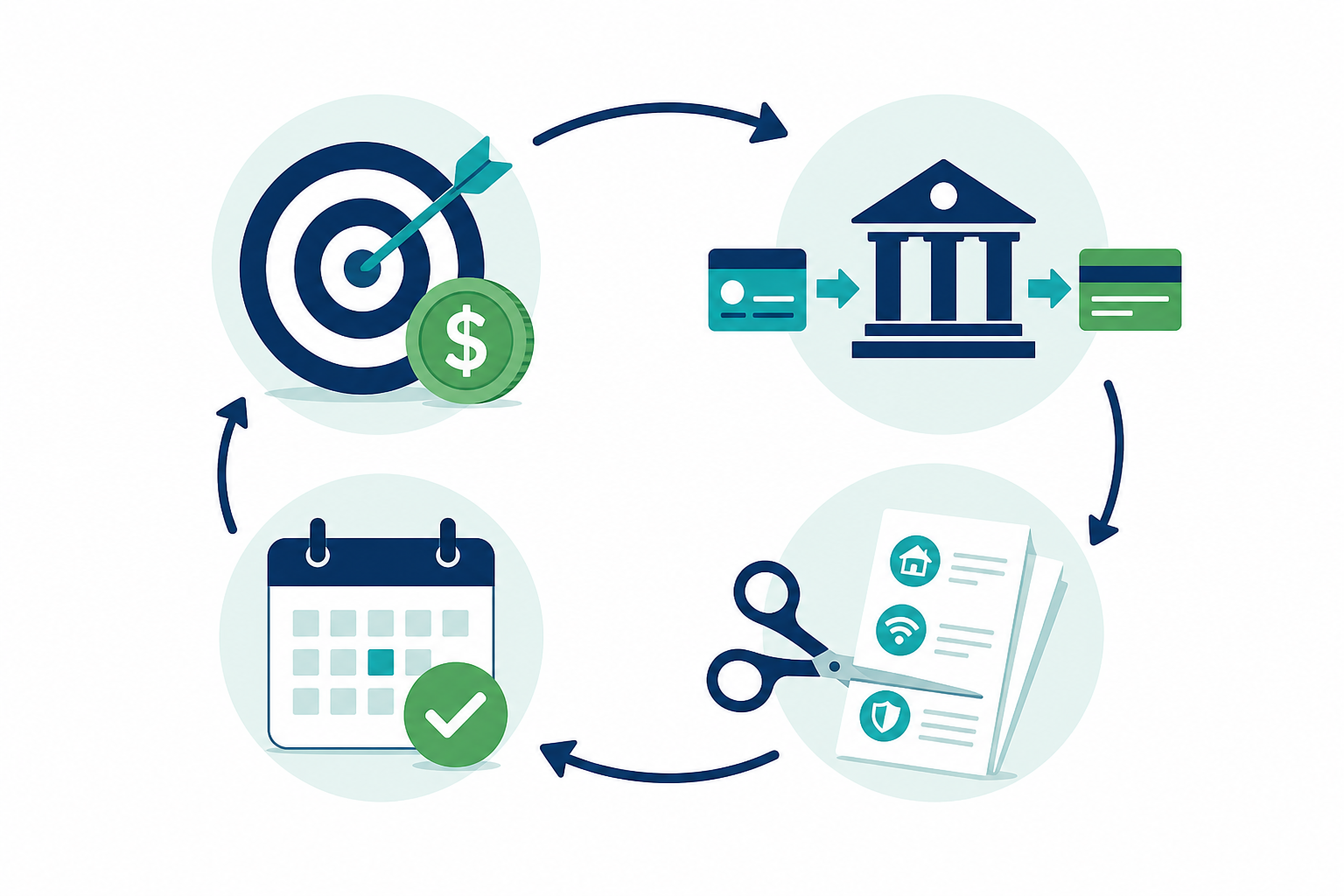
A refund can support more than one priority. Before spending it, check upcoming bills and write a short allocation plan. A practical order might be:
- Protect immediate needs. Cover overdue essentials or a near-term expense that would otherwise create costly debt.
- Build emergency savings. Even a partial cash cushion can reduce reliance on credit cards when an unexpected expense arrives.
- Reduce expensive debt. Compare interest rates, fees, and any prepayment terms before choosing which balance to pay.
- Fund a defined goal. Consider a known car repair, insurance deductible, education expense, or other planned need.
- Consider long-term saving. Retirement or investment contributions may fit after immediate finances are stable, subject to eligibility, contribution limits, risk, and tax rules.
Example Refund Plan
Suppose a household receives a $2,400 refund. It might place $1,000 in emergency savings, use $900 toward a high-interest credit-card balance, reserve $300 for a necessary vehicle repair, and keep $200 for a planned family expense. This is only an illustration, not a recommended formula. The best allocation depends on cash flow, interest costs, job stability, upcoming bills, and personal goals.
Should You Adjust Your Withholding?
A large refund can mean you paid substantially more federal income tax during the year than necessary, although refundable credits can also create or enlarge a refund. Some taxpayers value the forced-savings effect; others prefer more take-home pay during the year. Neither approach is automatically right for every household.
Use the IRS Tax Withholding Estimator after a major income or family change, or when your refund or balance due is unexpectedly large. If an adjustment is appropriate, submit a new Form W-4 to your employer. The estimator is a planning tool, not a guarantee, and self-employed workers may also need estimated payments.
Common Tax Refund Mistakes to Avoid
- Counting on a specific date: Do not schedule a major payment around an estimated refund before the money arrives.
- Using unofficial tracking links: Start at IRS.gov or the official IRS2Go app to avoid phishing sites.
- Entering deposit details carelessly: Compare the routing and account numbers with a reliable bank record.
- Ignoring an IRS notice: A timely, accurate response can prevent a manageable issue from becoming more difficult.
- Paying unnecessary “release” fees: The IRS does not charge a fee to release a legitimate refund.
- Spending before making a plan: Decide what the money needs to accomplish while the return is still being processed.
Frequently Asked Questions
When can I check my tax refund status?
The IRS says status information is generally available about 24 hours after you e-file a current-year return. Mailed and prior-year returns may take longer to appear. The tracker updates about once daily.
Why is my refund still being processed after 21 days?
Your return may need a correction, identity verification, credit review, or manual processing. Follow the instructions in Where’s My Refund? and respond promptly if the IRS sends a letter.
Can the IRS take my refund for debt?
All or part of a refund may be offset for eligible past-due federal tax or certain other government-referred debts. You should receive a notice explaining the amount and the agency involved.
Can I change my bank account after filing?
You generally cannot change direct-deposit information after the IRS accepts the return. If a bank rejects the deposit, the IRS may use another payment method. Follow official IRS status updates and notices.
Is a tax refund considered taxable income?
A federal income tax refund is generally not taxable on your next federal return. A state tax refund may be taxable in some circumstances, particularly if you previously deducted state taxes. Ask a tax professional about your facts.
Bottom Line
Tax refunds represent an overpayment or refundable-credit amount returned after the IRS processes your return. E-file accurately, choose direct deposit, track the return through official IRS tools, and avoid making plans that depend on a guaranteed arrival date.
Once the refund arrives, use a simple written plan that reflects immediate needs, expensive debt, emergency savings, and longer-term goals. Review withholding if the result was much larger or smaller than expected.
References
- Internal Revenue Service — About Refunds
- Internal Revenue Service — Where’s My Refund?
- Internal Revenue Service — Ways to Check the Status of a Tax Refund
- Internal Revenue Service — EITC and ACTC Refund Timing
- Internal Revenue Service — Split Refund FAQs
- U.S. Department of the Treasury, Bureau of the Fiscal Service — Treasury Offset Program
- Internal Revenue Service — Tax Withholding Estimator