Online Banks for Beginners
A beginner-friendly online bank should make everyday money management simple, transparent, secure, and affordable. This guide explains what to compare, which features matter most, and how to open and use an account safely.

- Prioritize FDIC or NCUA insurance, low recurring fees, clear overdraft rules, and reliable support.
- A polished app is useful, but the account agreement and fee schedule matter more than marketing.
- Check how you will deposit cash, withdraw money, replace a debit card, and reach a person when something goes wrong.
- Use multi-factor authentication, alerts, and a unique password from the first day.
- Keep your previous account open until direct deposits, automatic payments, and transfers work correctly.
Online banks for beginners can be a practical starting point because many offer simple mobile tools, broad ATM access, and checking accounts without monthly maintenance fees. The tradeoff is that you may not have a nearby branch. You will usually open the account, verify your identity, move money, deposit checks, and contact support through a website or app.
The best first account is not necessarily the one with the biggest bonus or highest advertised interest rate. It is the account whose rules you understand and whose everyday services match how you actually receive, spend, save, and withdraw money.
What Is an Online Bank?
An online bank provides most or all banking services digitally. Some are independent banks with no traditional branches. Others are online divisions of banks that also operate branches or cafés. A financial technology app may look like a bank but may instead place customer deposits at one or more partner banks.
That distinction matters. The FDIC insures eligible deposits held at an insured bank, not every financial product or app. Confirm the legal name of the institution that holds your money, look for the official FDIC digital sign, and use FDIC BankFind when needed. Federally insured credit unions use NCUA coverage instead.
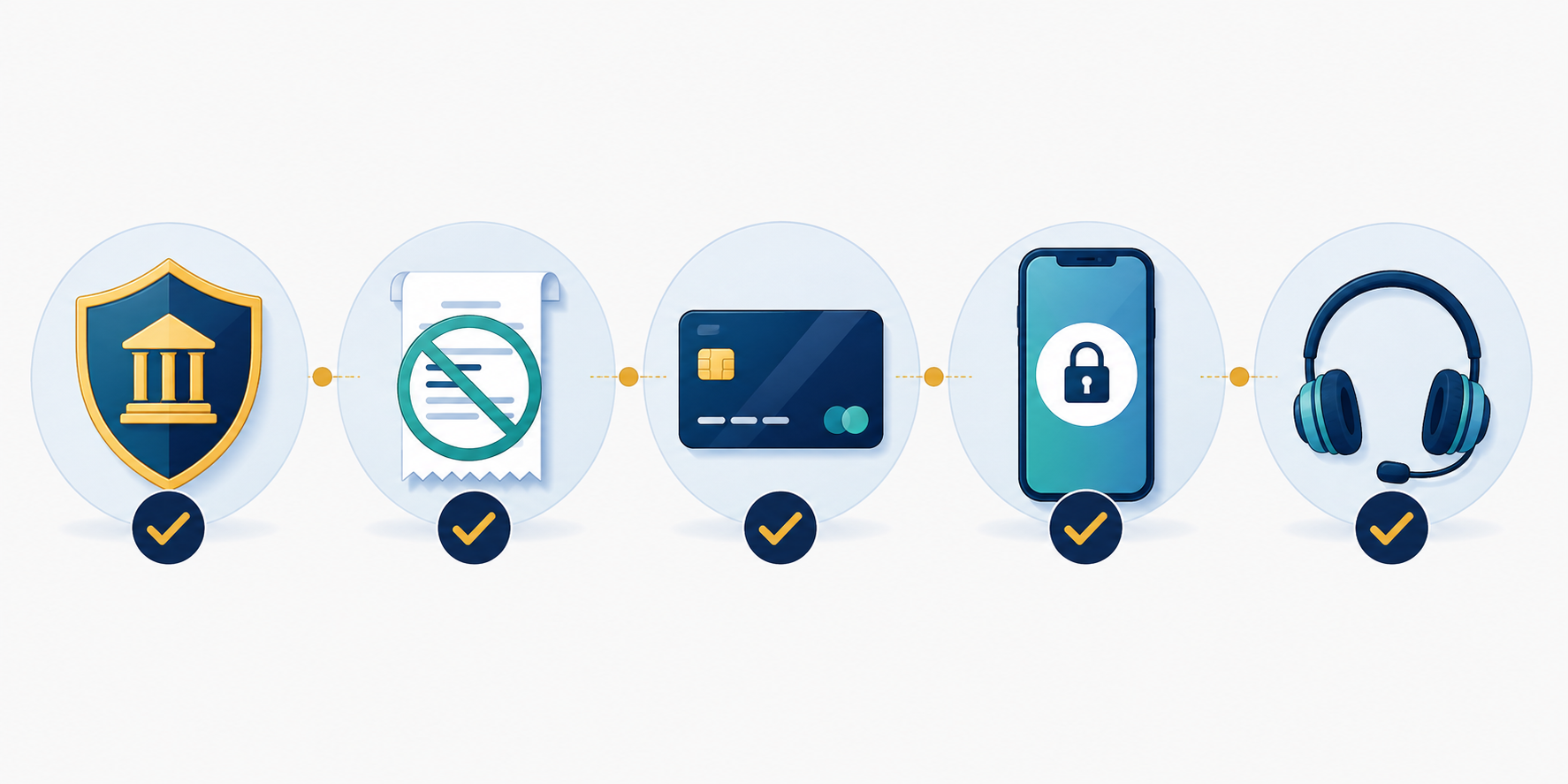
Beginner Checklist: Five Features to Verify
1. Deposit insurance
FDIC insurance generally covers eligible deposits up to at least $250,000 per depositor, per insured bank, for each ownership category. Checking, savings, money market deposit accounts, and certificates of deposit can qualify. Stocks, bonds, mutual funds, crypto assets, and similar investments are not FDIC-insured simply because they appear inside a banking app.
2. Fees and minimum balance rules
Review the full fee schedule. The Consumer Financial Protection Bureau notes that even an account described as “free” may still charge for certain services, including out-of-network ATMs, stop payments, dormant accounts, returned items, or check printing. Look beyond the monthly fee and ask what ordinary mistakes would cost.
3. ATM, cash, and check access
Check the fee-free ATM network, daily withdrawal limits, mobile check deposit policy, and cash-deposit options. If you regularly receive cash, an online-only bank that requires a paid retail deposit service may be less convenient than a bank or credit union with nearby deposit-taking ATMs or branches.
4. Security and alerts
Choose a bank that supports multi-factor authentication, transaction alerts, debit-card locking, fraud monitoring, and a clear process for reporting unauthorized activity. The Federal Trade Commission warns that legitimate verification codes should not be shared with someone who contacts you. A caller asking for a code may be trying to take over your account.
5. Customer support
Review telephone hours, chat availability, secure messaging, and emergency card support. Beginners often need help with a first mobile deposit, transfer hold, missing debit card, or direct-deposit change. A useful bank should explain the next step clearly and provide a way to reach a person.
Beginner-Friendly Online Bank Examples
The following examples are educational, not a ranking or endorsement. Published features were reviewed in September 2026 and can change. Always verify the current account agreement, fee sheet, eligibility rules, rates, and insurance disclosures before applying.
| Account example | Why a beginner may consider it | Important point to verify |
|---|---|---|
| Ally Bank Spending Account | Ally advertises no monthly maintenance fee, no minimum balance, no overdraft fee, 24/7 support, and access to a large fee-free ATM network. | There are no traditional branches; review cash-deposit availability and the current spending-account agreement. |
| Capital One 360 Checking | Capital One advertises no monthly fee, no minimum balance, no overdraft fee, a debit card, and broad ATM access. | Confirm whether nearby ATMs accept deposits and whether available branch or café locations fit your needs. |
| SoFi Checking and Savings | SoFi advertises no monthly account fee or minimum balance fee, integrated checking and savings, mobile tools, and a large fee-free ATM network. | Opening checking also opens savings; some rates, bonuses, and extra features require qualifying deposits or other conditions. |
| Discover Cashback Debit | Discover publishes debit-card rewards and access to a large no-fee ATM network. | Rewards eligibility, purchase limits, ATM operator fees, and account terms can change; review the current deposit agreement. |
These accounts illustrate different strengths: straightforward fees, hybrid physical access, integrated savings, or debit rewards. A local credit union or community bank may still be better if you deposit cash frequently, want in-person help, or prefer a relationship with a nearby institution.
Checking vs. Savings: What Should a Beginner Open?
A checking account is designed for everyday transactions such as debit-card purchases, bill payments, ATM withdrawals, and direct deposits. A savings account is designed for money you do not plan to spend immediately. Many beginners benefit from both: checking for monthly cash flow and savings for emergencies and short-term goals.
Do not choose a checking account only because it pays interest. The CFPB recommends comparing fees and terms because fees or minimum-balance rules can cost more than the interest you earn. For savings, compare the annual percentage yield, withdrawal or transfer rules, minimum requirements, and whether a promotional rate can change.
A welcome bonus may require a specific direct-deposit amount, balance, or deadline. Never move your primary paycheck until you understand the requirements and have tested the account. A useful long-term account is more valuable than a one-time offer that pushes you into inconvenient rules.
How to Open Your First Online Bank Account
- Compare the disclosures. Read the account agreement, fee schedule, funds-availability policy, privacy notice, and overdraft choices.
- Confirm insurance and identity. Verify the bank in FDIC BankFind or confirm federal credit-union insurance. Apply only through the official website or app.
- Gather basic information. Banks commonly request your legal name, address, date of birth, taxpayer identification number, and government-issued identification.
- Fund the account carefully. Start with a manageable transfer. Keep enough money in the old account for pending checks, bills, and automatic payments.
- Set up security. Create a unique password, turn on multi-factor authentication, enable deposit and purchase alerts, and learn how to lock the debit card.
- Move recurring transactions. Update direct deposit and bills one at a time. Confirm each change before closing the previous account.
Common Beginner Mistakes
- Ignoring deposit holds. A mobile check may appear in your balance before all funds are available to spend.
- Using every ATM. Your bank may charge nothing while the ATM operator adds its own fee.
- Opting into overdraft without understanding it. Ask which transactions can create a negative balance and what happens afterward.
- Sharing verification codes. Bank impersonators use urgency to persuade customers to reveal one-time codes.
- Closing the old account too quickly. A forgotten subscription or delayed check can cause a returned payment.
- Treating an app balance as a budget. Pending card purchases, scheduled bills, tips, and checks may not be fully reflected yet.
A Simple First-Month Routine
During the first month, check the account several times a week. Match transactions to receipts, confirm that direct deposit arrives, and watch how long transfers and mobile checks take. Keep a small buffer in checking so routine timing differences do not create a negative balance.
Once the system is working, automate a small transfer to savings after each payday. Review alerts immediately, but do not click links in unexpected texts or emails. Open the official app yourself or call the number printed on the back of your card.
This article provides general educational information and is not personalized financial, legal, tax, or investment advice. Bank features, rates, fees, eligibility rules, and deposit-insurance treatment can change.
Frequently Asked Questions
Are online banks safe for beginners?
An online bank can be appropriate when it is a legitimate FDIC-insured bank, or when a federally insured credit union provides the account. Verify the institution, use strong security settings, and understand whether a non-bank app relies on partner banks.
What is the easiest online bank account to open?
Ease depends on identity verification, eligibility, funding method, and your banking history. A simple application is helpful, but beginners should prioritize clear fees, insurance, support, and useful access over speed alone.
Can I open an online bank account with no money?
Some accounts advertise no minimum opening deposit, while others require an initial transfer. Even when the minimum is zero, you must add money before spending and may need qualifying activity for certain benefits.
How do I deposit cash into an online bank?
Options may include deposit-taking ATMs, participating retail locations, money orders, or transferring funds from another account. Availability and fees vary, so frequent cash users should compare this feature before opening an account.
Should a beginner choose checking, savings, or both?
Checking supports everyday payments, while savings separates money for emergencies and goals. Many beginners benefit from both accounts, provided they understand transfer rules, fees, and how overdraft protection works.
Bottom Line
Online banks for beginners work best when they reduce avoidable fees and make basic actions easy to understand. Start with insurance, fees, access, security, and support. Test the account before moving everything, keep a small buffer, and build a routine around alerts and regular transaction reviews.
References
- Consumer Financial Protection Bureau — Bank accounts and services
- CFPB — Fees on “free” checking accounts
- CFPB — Interest-bearing checking accounts
- Federal Deposit Insurance Corporation — Deposit insurance
- FDIC BankFind Suite
- Federal Trade Commission — Two-factor authentication
- FTC — Verification code scams
- Ally Bank — Spending Account
- Capital One — 360 Checking
- SoFi Bank — Checking and Savings
- Discover Bank — National Deposit Account Agreement