
Building Credit From Scratch: A Step-by-Step Guide
Building credit from scratch means creating a record that shows lenders how you manage borrowed money. Start with one affordable account that reports to the major credit bureaus, pay every bill on time, keep credit-card balances low, and review your reports for accuracy.

- You do not begin with a zero credit score; you may have no score until enough information is reported.
- A secured card or credit-builder loan can create history when the provider reports payments to nationwide credit bureaus.
- On-time payments and low revolving balances matter more than carrying debt or paying interest.
- One carefully managed starter account is usually easier to control than several new accounts.
- No legitimate company can guarantee a specific score or an exact credit-building timeline.
What Building Credit From Scratch Really Means
A credit report is a record of accounts and payment activity maintained by Equifax, Experian, and TransUnion. A credit score is a number calculated from information in a report. FICO and VantageScore are different scoring systems, and lenders may use different versions, so you can have several legitimate scores rather than one universal number.
If you have never used reported credit, your file may be “thin” or nonexistent. That is different from having bad credit. The goal is not to borrow as much as possible. It is to generate accurate, positive data over time while keeping costs and risk low.
For more context before building credit from scratch, review MoneyVanta’s guides to credit score factors, credit score ranges, and credit score myths.
For a standard FICO Score, FICO says a report generally needs at least one account opened for six months or longer and at least one account reported within the previous six months. Other models can have different eligibility rules. Six months is therefore a possible scoring threshold, not a promise of a particular score.
Starter Credit Options Compared
| Option | How it works | What to verify | Main risk or cost |
|---|---|---|---|
| Secured credit card | A cash deposit commonly supports the credit line, but purchases create a monthly bill. | Reporting to all three bureaus, annual fee, APR, deposit refund, and upgrade terms. | The deposit ties up cash; interest and fees may be high. |
| Credit-builder loan | Loan proceeds are generally held in savings while you make scheduled payments. | Reporting policy, total cost, payment amount, term, and release rules. | Late payments can hurt, and interest or fees reduce the amount received. |
| Authorized user | A primary cardholder adds you to an existing credit-card account. | Whether the issuer reports authorized users and the account’s age, balance, and history. | You depend on the primary user’s behavior and issuer reporting. |
| Student or starter card | An unsecured card designed for applicants with limited history. | Eligibility, fees, APR, limit, reporting, and rewards conditions. | A small limit can produce high utilization quickly. |
| Rent-reporting service | Eligible rent payments may be sent to one or more credit bureaus. | Participating bureaus, setup and monthly fees, supported scoring models, and cancellation. | Coverage varies, and score improvement is not guaranteed. |
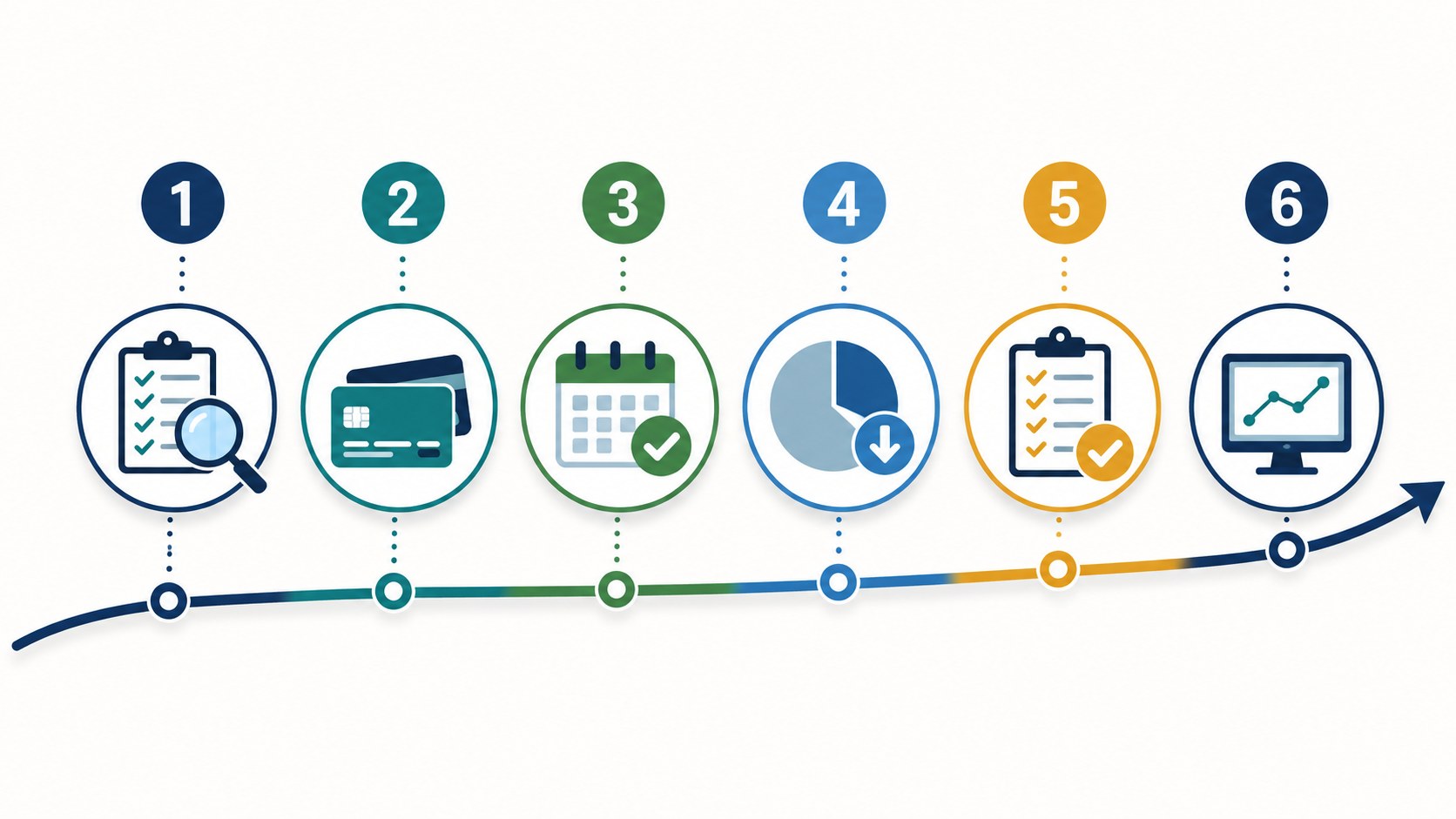
How to Build Credit From Scratch in Six Steps
1Check Whether You Already Have a Credit File
Visit AnnualCreditReport.com, the federally authorized site, to request reports from the three nationwide credit bureaus. You may already have a file because of a student loan, an old retail account, or authorized-user status. Checking your own reports is a soft inquiry and does not lower your scores.
Review your identifying information, account ownership, limits, balances, and payment history. If information is inaccurate, dispute it with the credit bureau and the company that supplied it. Keep supporting documents. Do not dispute accurate negative information simply because you dislike it.
2Choose One Low-Cost Starter Account
Compare products before applying. A useful starter account should report regular activity to the major bureaus, fit your budget, and have understandable fees. For a secured card, examine the deposit requirement, annual fee, APR, grace period, and whether the issuer offers a path to an unsecured card.
A credit-builder loan may suit someone who prefers fixed payments and wants to build savings. Ask when funds are released, whether early payoff changes reporting, and how much the loan costs in dollars. Never choose a payment that would become difficult after a routine expense or income interruption.
3Pay Every Bill on Time
Payment history is a major factor in widely used scoring models. Set automatic payment for at least the minimum as a backup, then use calendar and account alerts. Confirm that each transfer actually posts; an expired card, changed bank account, or insufficient balance can cause an automatic payment to fail.
Paying the full statement balance by the due date can help you avoid interest when a grace period applies. You do not need to carry a balance to build credit. If you expect trouble paying, contact the creditor before the due date and ask about available hardship arrangements and how they will be reported.
4Keep Reported Card Balances Low
Credit utilization is the reported balance divided by the credit limit. A $75 balance on a $500 limit equals 15% utilization. Scoring models may consider each card and all cards together. The Consumer Financial Protection Bureau notes that experts often advise staying below 30%, while some suggest lower.
Thirty percent is not a magic threshold and no utilization level guarantees a result. A practical plan is to make a few budgeted purchases, avoid approaching the limit, and pay the statement balance in full. If the issuer reports before your due date, an additional payment before the statement closes may reduce the reported balance.
5Apply Selectively and Protect Account Age
A formal application can create a hard inquiry. Several applications and newly opened accounts in a short period may make a thin file appear riskier. Research eligibility and costs first. Prequalification sometimes uses a soft inquiry, but always read the issuer’s disclosure before submitting an application.
As accounts age, they can add useful history. Consider keeping a no-fee starter card open when it remains secure and manageable. However, do not keep a costly product or one that encourages overspending solely for a score. Your budget and financial safety come first.
6Monitor Reports and Build Consistency
Creditors report on their own schedules, so a payment or lower balance may not appear immediately. Review reports periodically for correct limits, balances, and payment status. Follow the same score model over time rather than comparing unrelated numbers from different apps.
Small score changes are normal. Focus on the underlying habits: no missed payments, manageable balances, few unnecessary applications, and accurate reports. Building credit is a recordkeeping process measured over months and years, not a weekly contest.
A Simple 12-Month Credit-Building Plan
| Period | Action | Checkpoint |
|---|---|---|
| Before applying | Review reports, set a monthly spending cap, and compare one starter product. | Confirm fees, APR, reporting, deposit or loan terms, and fraud protections. |
| Months 1–3 | Use the account lightly and pay every statement on time. | Verify autopay, available funds, and the first reported account information. |
| Months 4–6 | Repeat the same routine and avoid unnecessary applications. | Check reported balances, limits, and payment accuracy. |
| Months 7–12 | Maintain the account and review all three reports again. | Evaluate fees, upgrade eligibility, and progress using the same score model. |
This plan is an organizational example, not a score forecast. Results depend on your complete file, the scoring model, when creditors report, and whether any negative information appears.
What Does Not Usually Build Credit?
Ordinary debit-card and cash purchases do not create a borrowing-and-repayment record. Prepaid cards generally do not build traditional credit either. The CFPB also cautions that payday loans typically do not report positive payments to nationwide credit bureaus, while some “buy here, pay here” auto dealers may report only negative information.
A product advertised as “credit building” is useful only if relevant activity reaches a bureau and is considered by a scoring model. Before paying, ask which bureaus receive data, whether both positive and negative payments are reported, the total fees, and how cancellation works.
Building Credit From Scratch: Common Mistakes
- Opening several cards before learning to manage one account.
- Carrying debt and paying interest because you believe it builds credit faster.
- Using most of a small credit limit and overlooking utilization.
- Relying on autopay without checking that the connected account has enough money.
- Choosing a card or loan without confirming bureau reporting and total cost.
- Co-signing or accepting joint responsibility without understanding the full legal obligation.
- Paying for “tradelines” or credit-repair services that promise quick, guaranteed results.
If you are already struggling with debt rather than simply new to credit, consider a reputable nonprofit credit counselor. Credit building should not require taking on obligations your budget cannot support.
Frequently Asked Questions
How long does building credit from scratch take?
A standard FICO Score generally requires at least one account open for six months and recent reporting, but other models differ. A usable score and a strong profile are not the same thing, and no timeline guarantees a particular result.
Can I build credit without a credit card?
Yes. A credit-builder loan or another reported installment account may establish history. Some rent-reporting services may help certain files, but verify bureau coverage, fees, and model eligibility before enrolling.
Is a secured credit card the same as a prepaid card?
No. A secured credit card uses a deposit as collateral but still creates a credit account and monthly bill. A prepaid card spends money loaded in advance and generally does not establish credit history.
How much should I spend on my first credit card?
Charge only planned purchases your budget can repay. Keeping the reported balance low relative to the limit may help, but there is no spending amount or utilization percentage that guarantees a score.
Does becoming an authorized user build credit?
It can if the issuer reports the account to your credit files. The primary user’s balance and payment behavior may also affect the reported account, so confirm reporting and choose the arrangement carefully.
Bottom Line
Building credit from scratch is a gradual process: verify your reports, choose one affordable reporting account, pay on time, keep card balances low, apply sparingly, and monitor for errors. Sustainable habits matter more than shortcuts, and paying interest is not required to create positive history.
Disclaimer: This article is for general informational purposes only and does not constitute personalized financial, investment, tax, legal, lending, or credit-repair advice. Product terms, reporting practices, scoring results, and lender decisions vary.
Sources
- Consumer Financial Protection Bureau: Ways to start or rebuild a good credit history
- Consumer Financial Protection Bureau: How to rebuild your credit
- Consumer Financial Protection Bureau: How to get and keep a good credit score
- Federal Trade Commission: Free credit reports
- Federal Trade Commission: Fixing Your Credit FAQs
- myFICO: Building a credit history