
Where’s My Refund? Track Your IRS Refund in 2026
Where’s My Refund? How to Track Your IRS Refund in 2026
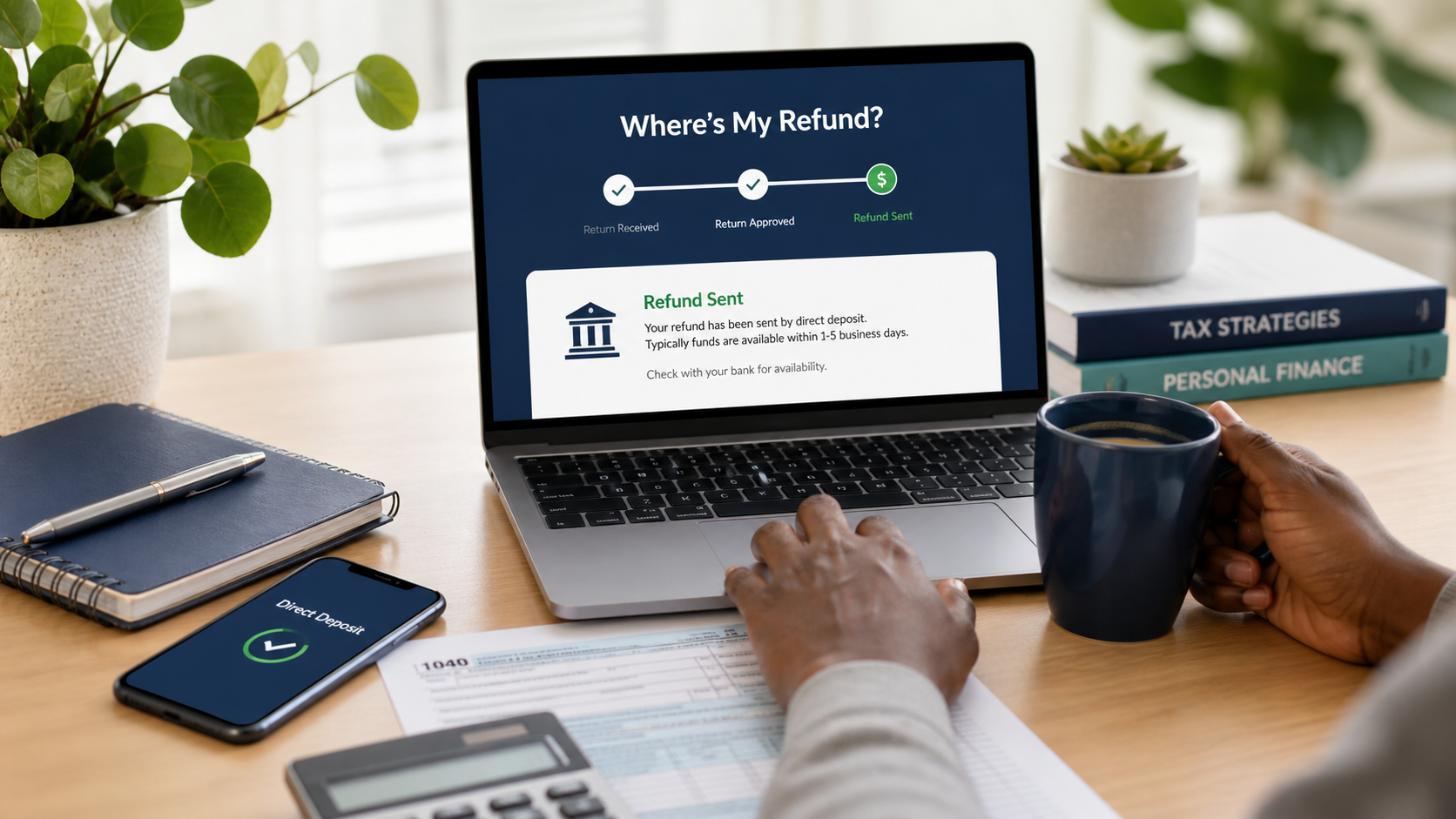
The IRS refund tracker, known as “Where’s My Refund?”, lets you check whether your federal tax return was received, your refund was approved, or the payment was sent. For a current-year e-filed return, status information is generally available within 24 hours after IRS acceptance.
Key Takeaways
- Check a current-year e-filed return about 24 hours after the IRS accepts it, a prior-year e-filed return after three days, or a paper return after four weeks.
- You need your Social Security number or ITIN, filing status, tax year, and exact whole-dollar refund amount.
- Most refunds are issued in fewer than 21 days, but errors, identity checks, credits, amended returns, or manual review can take longer.
- The tracker normally updates once per day, usually overnight, so repeated checks during the same day will not provide faster information.
- Call the IRS only after the normal processing window has passed or when the tracker specifically tells you to make contact.
If you are asking “Where’s my refund?” after filing a federal income tax return, begin at the official IRS Refunds page. Avoid search ads, texts, or emails that ask for personal information to “release” a refund. The IRS tracker is free, and you can check without signing in.
For more federal tax guidance, explore MoneyVanta’s Taxes resources.
How to Use the IRS Refund Tracker
The IRS refund tracker is designed for individual federal income tax refunds. It does not require a paid tax-preparation account. Have the return you actually filed in front of you, because the entries must match IRS records.
- Go directly to IRS.gov/refunds and select the refund tracker.
- Choose the tax year for the refund you are tracking.
- Enter the primary taxpayer’s Social Security number or Individual Taxpayer Identification Number.
- Select the filing status shown on the return, such as single, married filing jointly, or head of household.
- Enter the exact whole-dollar refund amount shown on the filed return, then submit the request.
You can also check through the IRS mobile app or an IRS Individual Online Account. The online account can show refund and amended-return status, tax records, notices, and other account information. Creating an account requires identity verification; the basic refund tracker does not.
When Will Your Refund Status Appear?
| How you filed | When status is generally available | Typical refund timing |
|---|---|---|
| Current-year electronic return | About 24 hours after IRS acceptance | Most refunds are issued in fewer than 21 days |
| Prior-year electronic return | About three days after filing | Timing varies if additional review is required |
| Paper return | About four weeks after filing | Generally six weeks or more after IRS receipt |
| Amended return | Use the amended-return tracker | Longer processing is common because the original and amended returns must be compared |
These are processing guidelines, not guaranteed delivery dates. The bank may need additional time to post a direct deposit, and a mailed payment can take longer to arrive. In 2026, the IRS continues to emphasize electronic filing and direct deposit as the fastest way to file and receive a federal refund.
Where’s My Refund: What the Three Statuses Mean
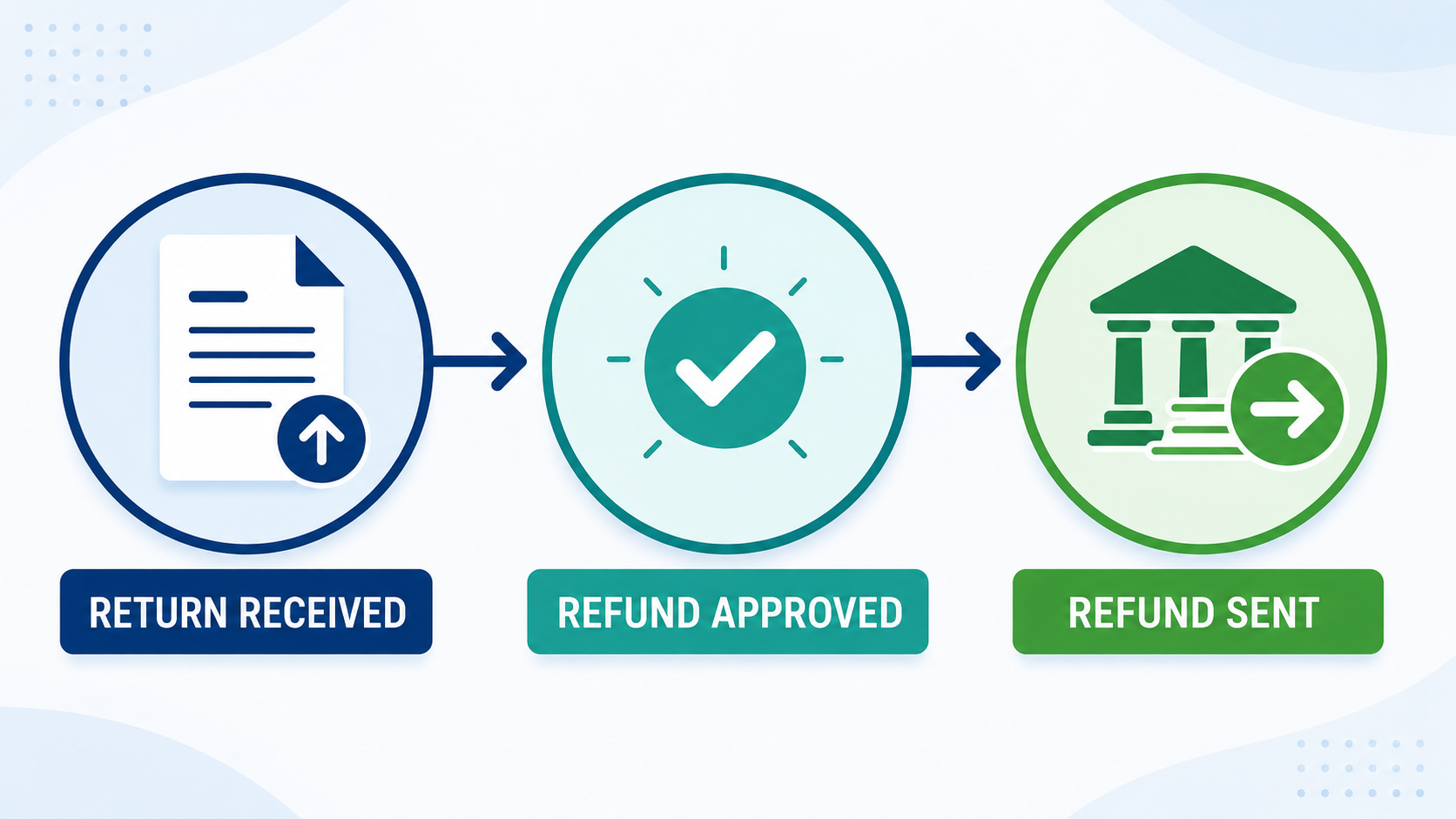
Return Received
The IRS has received the return and started processing it. This does not mean the refund is approved. A return can remain here while automated checks run or while information is reviewed.
Refund Approved
The IRS has approved the refund and normally provides a projected issue date. The displayed amount can be different from the amount claimed if the IRS corrected the return or another federal or state agency applied an offset.
Refund Sent
The IRS has released the payment to the bank or issued it using the applicable delivery method. A “sent” status does not always mean the money will appear in the account immediately. Check the projected date and allow time for the financial institution to post the deposit.
Why an IRS Refund May Be Delayed
A delay does not automatically mean an audit. Many returns take longer because they require correction, verification, or manual handling. Common causes include:
- Missing or inconsistent information: A math error, omitted form, incorrect dependent information, or an unsigned paper return can interrupt normal processing.
- Identity or fraud screening: The IRS may pause a return to confirm the taxpayer’s identity or investigate possible tax-related identity theft.
- Earned Income Tax Credit or Additional Child Tax Credit: Federal law prevents the IRS from issuing refunds containing these credits before mid-February. For the 2026 filing season, the IRS expected most qualifying direct-deposit refunds without other issues by March 2, 2026.
- Amended returns: The IRS must compare the original return with the amendment, which requires additional processing.
- Injured spouse claims: Form 8379 usually requires manual handling. IRS guidance lists longer waiting periods for both electronic and paper submissions.
- Refund offset: Some or all of a refund may be applied to certain past-due federal or state debts. The IRS or Bureau of the Fiscal Service generally sends an explanation.
- Banking problems: An incorrect routing number, a closed account, or a deposit rejected by the bank can delay delivery or cause the payment to be returned.
If the IRS needs documents or identity verification, it generally sends a notice. Follow the instructions in the notice and verify it through your IRS Online Account or an official IRS phone number. Do not send documents to a contact method supplied by an unsolicited caller or message.
When Should You Contact the IRS?
Checking more often or calling immediately does not speed up processing. IRS guidance says to contact the agency when at least 21 days have passed since an electronic filing, more than six weeks have passed since a paper return was mailed, or the Where’s My Refund tool instructs you to call.
For a current-year individual refund, the automated refund hotline is 800-829-1954. Joint filers who need a refund trace may need to call 800-829-1040. Confirm telephone numbers on IRS.gov before calling because government contact information can change.
What to Do If Your Refund Was Sent but Never Arrived
First compare the refund tracker’s issue date with your bank activity and the direct-deposit information on your return. If a paper check was issued, the IRS advises allowing up to four weeks from the issue date for delivery.
If the payment is missing after the applicable waiting period, you may be able to start a refund trace through the tracker, the IRS app, or the automated hotline. Married taxpayers who filed jointly generally must contact the IRS or submit Form 3911, Taxpayer Statement Regarding Refund. A trace determines whether a check was cashed or a direct deposit reached the intended account; it does not guarantee that the IRS will immediately issue another payment.
Common Refund-Tracking Mistakes
- Entering an estimated refund instead of the exact whole-dollar amount on the filed return.
- Using the filing status you intended to choose rather than the status shown on the submitted return.
- Checking before the IRS has had enough time to load the return into the system.
- Assuming “accepted” by tax software means the refund has been approved.
- Filing a second return because the first refund is delayed. A duplicate filing can create additional processing problems.
- Responding to a refund scam instead of using IRS.gov and official notices.
Frequently Asked Questions
How soon can I check Where’s My Refund after e-filing?
For a current-year federal return, the status is generally available about 24 hours after the IRS accepts the electronic filing. A prior-year e-filed return may take about three days to appear.
Why does Where’s My Refund still say “Return Received”?
The return may still be undergoing routine processing, corrections, identity checks, or manual review. The status alone does not establish an audit. Watch for an IRS notice and contact the agency only after the stated waiting period or when instructed.
Does “Refund Sent” mean the money is already in my bank account?
Not necessarily. It means the IRS released the refund. Your bank may need additional time to post the deposit, and mailed payments require delivery time. Compare the projected date with your account activity.
Can I use Where’s My Refund for an amended tax return?
Use the IRS amended-return status service or your IRS Online Account instead. Amended returns commonly take longer because the IRS must review both the original return and the changes.
Will calling the IRS make my tax refund arrive faster?
No. Calling does not accelerate normal processing. Call when the tracker directs you, after 21 days for an e-filed return, or after more than six weeks for a mailed paper return.
Bottom Line
Where’s My Refund is the safest and most direct way to track a federal tax refund. Check only after the appropriate waiting period, use the exact information from your filed return, and treat the IRS estimate as a projection rather than a guarantee.
If the normal window has passed, follow the tracker’s instructions, review any IRS notice carefully, and use verified contact details from IRS.gov. Avoid filing a duplicate return or giving tax information to anyone who contacts you unexpectedly.
References
- Internal Revenue Service, IRS Refunds overview
- Internal Revenue Service, Ways to Check the Status of a Tax Refund, April 21, 2026.
- Internal Revenue Service, Processing Status for Tax Forms.
- Internal Revenue Service, IRS Opens the 2026 Filing Season.
- Internal Revenue Service, When Is Where’s My Refund Available?