
Monthly Budgeting: A Practical Step-by-Step Guide

Monthly budgeting means making a realistic plan for each dollar of your take-home pay before the month begins. List income, cover required bills, reserve money for savings and irregular costs, and set practical limits for flexible spending. Then check the plan weekly and update it when life changes.
Key Takeaways
- Build a monthly budget from net income, not gross pay.
- Use real statements and due dates so your plan matches cash flow.
- Include savings, debt minimums, and nonmonthly expenses from the start.
- Review weekly; adjustments are useful feedback, not failure.
What Is Monthly Budgeting?
A monthly budget is a written spending plan for one calendar month or one pay cycle. It shows the money you expect to receive, the bills you need to pay, the goals you want to fund, and the spending that can flex. Consumer.gov notes that a budget can help you avoid running out of money before your next paycheck and save for goals or emergencies.
The basic check is simple: monthly take-home income – planned spending – planned saving = zero or a positive cushion. If the result is negative, the plan needs a change before spending happens. If it is positive, decide where the remaining money should go instead of leaving it untracked.
How to Create a Monthly Budget in 7 Steps
- Calculate net monthly income. Use the amount that actually reaches your checking account after federal and state taxes, health coverage, retirement contributions, and payroll deductions. Include reliable side income or benefits only when they are reasonably expected.
- Review recent spending. Look at one to three months of bank and credit-card transactions. The CFPB recommends examining several months so you capture less frequent costs, including insurance, medical care, gifts, and seasonal spending.
- List fixed bills and due dates. Add rent or mortgage, insurance, subscriptions, child care, minimum debt payments, and utilities. A monthly total matters, but the date each bill is due matters too.
- Estimate variable essentials. Include groceries, transportation, medications, household supplies, and utility changes. Start with a realistic average rather than an ideal number.
- Create sinking funds. Divide known occasional costs-such as car registration, annual insurance, holidays, or school supplies-into monthly amounts.
- Plan savings and flexible spending. Put emergency savings, retirement contributions, extra debt payments, dining, entertainment, and personal spending into separate categories.
- Compare, schedule, and review. Subtract the whole plan from income. If your plan is short, reduce flexible categories or explore timing and income options before the month starts. Check actual spending weekly.
Monthly Budget Categories to Include
Fixed bills
Rent, insurance, minimum debt payments, subscriptions, and regular services that are relatively predictable.
Variable essentials
Groceries, utilities, fuel, transportation, health costs, and household supplies.
Financial goals
Emergency savings, retirement, sinking funds, and debt payments above the minimum.
Flexible spending
Dining out, entertainment, hobbies, travel, clothing, and other costs that can be adjusted.
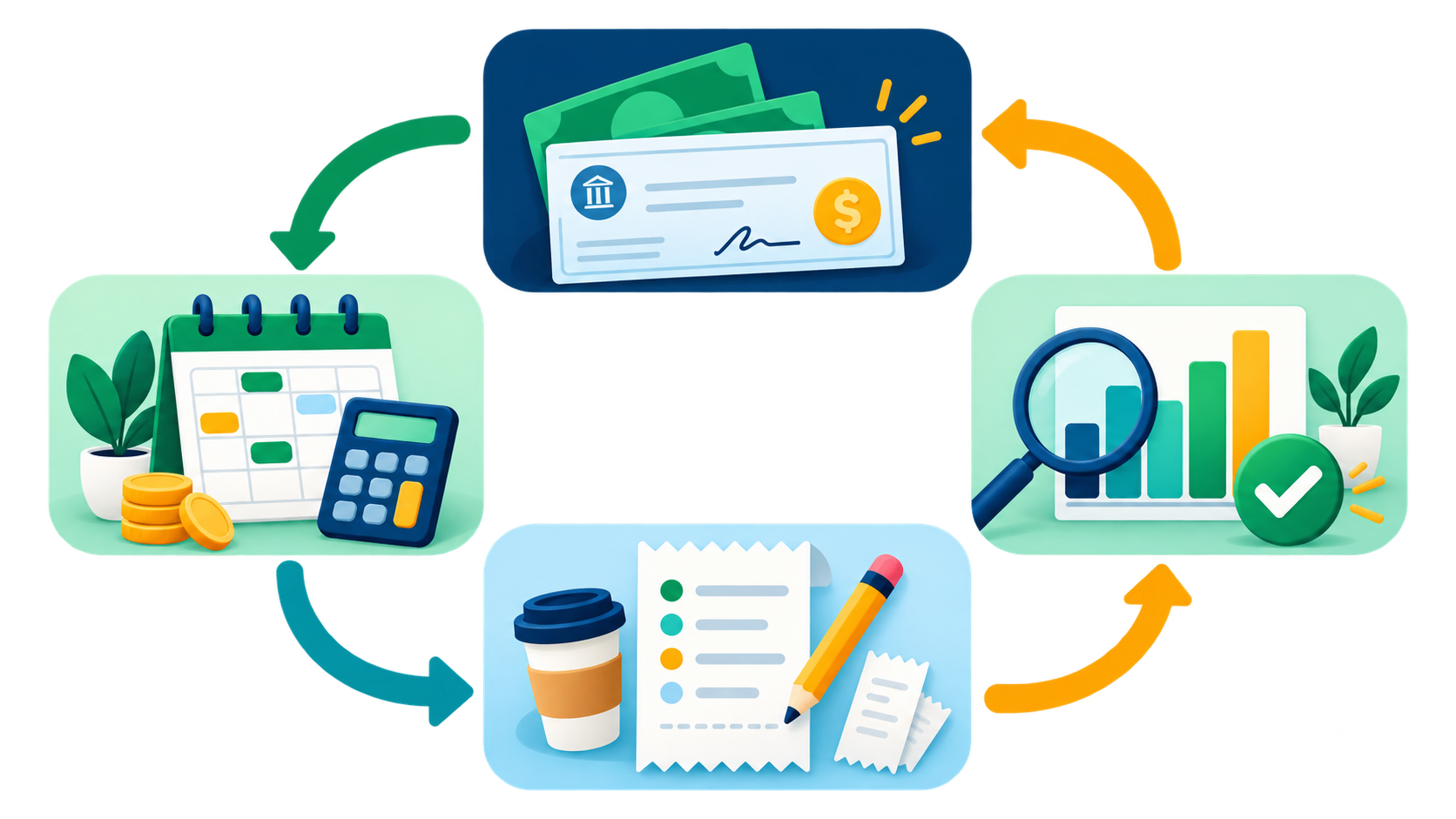
Use a notebook, spreadsheet, banking tool, or app-the best monthly budget is the one you will review consistently.
Monthly Budget Example for $4,500 Take-Home Pay
This illustration is not a recommendation. Housing, location, family needs, insurance, debt, and income stability can change the right allocation.
| Category | Planned monthly amount | Share of income |
|---|---|---|
| Housing and utilities | $1,575 | 35% |
| Food and household supplies | $675 | 15% |
| Transportation | $450 | 10% |
| Insurance and health | $360 | 8% |
| Minimum debt payments | $315 | 7% |
| Savings and sinking funds | $675 | 15% |
| Flexible spending | $360 | 8% |
| Buffer | $90 | 2% |
| Total | $4,500 | 100% |
A $90 buffer can absorb a small price increase, a tip, or a bill that posts earlier than expected. If it remains unused, move it consciously to savings, debt, or next month’s buffer.
Match Your Budget to Your Cash Flow
A monthly total can look balanced while the checking account runs low in the second week. Cash flow is the timing of money coming in and going out. Put every paycheck and due date on a simple calendar. If a bill regularly falls before income arrives, contact the provider or creditor early to ask whether a different due date is available. Do not assume a change will be granted, but asking before a missed payment can provide time to consider options.
For a biweekly paycheck, break flexible categories into smaller weekly or payday amounts. For example, a $600 grocery line may be easier to manage as roughly $150 per week. This gives you faster feedback than waiting until month-end.
How to Budget for Irregular Income
Freelancers, commission earners, and hourly workers should avoid setting permanent spending levels from their best month. Consumer.gov suggests using last year’s income divided by 12 for a monthly estimate when income is not monthly; many households may choose an even more conservative baseline for core bills. Prioritize housing, food, utilities, insurance, transportation, required debt payments, and taxes. In stronger months, replenish a cash buffer and fund upcoming irregular costs before raising flexible spending.
Example: if a $720 auto-insurance premium is due in six months, reserving $120 each month can prepare for the bill: $720 / 6 = $120. Confirm your own due date and premium.
Monthly Budgeting for Savings, Debt, and Taxes
Treat savings as a planned category rather than an afterthought. A modest automatic transfer may be more sustainable than an ambitious target that creates a shortfall. Keep minimum debt payments in the required-bills section; any extra payoff should have its own line item. This makes it easier to lower the extra amount temporarily if essential expenses rise.
Employees should plan from take-home pay. If your job, family situation, or other income changes, the IRS recommends reviewing federal tax withholding; its Tax Withholding Estimator can help eligible users compare expected tax with current withholding. This is general information, not individualized tax advice.
Common Monthly Budgeting Mistakes
Using gross pay: Taxes and payroll deductions cannot pay this month’s bills.
Forgetting nonmonthly costs: Annual renewals, repairs, and gifts are still expenses even when they do not appear every month.
Ignoring due dates: A balanced monthly total does not prevent a timing problem in checking.
Making every category too strict: A realistic plan is easier to maintain and improve.
Waiting until the end of the month: Weekly reviews leave time to adjust before a category is exhausted.
A 15-Minute Monthly Budget Routine
Near the end of each month, open your statements, calendar, and bill list. Update expected income, add known irregular costs, and copy forward the categories that still fit. On the same day each week, check balances and recent transactions, compare actual spending with each category, and confirm upcoming payments. At month-end, note what changed. The next plan should reflect what actually happened rather than what you hoped would happen.
Frequently Asked Questions
When should I make my monthly budget?
Make the first version before the month begins or before your first paycheck of the month. Update it as soon as income, bills, or priorities change.
What if my monthly expenses are higher than my income?
Protect essential housing, food, utilities, transportation, insurance, and required payments first. Review flexible costs, contact billers early about available options, and consider income or assistance resources that fit your situation.
How much should I save each month?
The right amount depends on your cash flow, debts, job stability, and near-term needs. Start with an amount you can sustain, even if small, and increase it when another expense ends or income rises.
Should I use the 50/30/20 budget rule?
It can be a helpful starting framework: 50% of take-home pay for needs, 30% for wants, and 20% for savings and extra debt repayment. Treat the percentages as guidelines, not requirements.
Do I need a budgeting app?
No. A paper plan, spreadsheet, bank tool, or app can all work. Consider security, cost, privacy, account connections, and whether the tool helps you review the plan regularly.
Bottom Line
Monthly budgeting works when it reflects real income, real bills, and real priorities. Start with take-home pay, plan for irregular costs, set aside savings, match bills to paydays, and review the plan before the month is over. A budget that changes with your life is doing its job.
Financial disclaimer: This article provides general educational information and is not individualized financial, tax, legal, or investment advice. Costs, taxes, benefits, and priorities vary. Review current terms and consult qualified professionals when appropriate.